Please visit on a laptop or desktop computer for the full interactive experience.

emissaryofgaia.com
Whitepaper Series · 2025 — 2026

Emissary
of GAIA

A constitutional framework for
ecosystem representation through AI

A ten-part series exploring how Environmental Artificial Intelligence can give ecosystems a legitimate voice in human governance — moving nature from stakeholder to principal, from consulted to represented.

1 / 10
GAIA
Paper 1 01 Jan 2025 Foundation

Bridging the Divide between the Rights of Nature and the Financialization of Nature

Through Integrated Governance and Technological Innovation

The opening paper challenges the prevailing narrative that Rights of Nature and the Financialization of Nature are irreconcilable paradigms. Rather than viewing them as fundamentally opposed, it argues for a unified framework — facilitated by integrated governance models, ENVAI, and digital environmental avatars that act as legal and economic proxies for natural ecosystems.

Paper 2 05 Sept 2025 Philosophy

The Civilizational Imperative for Symbiocentric Intelligence

Redefining AI Through an Epistemic Revolution

AI is becoming a central force in governance, science, and societal coordination — but its epistemic foundations remain inadequate for the complexity of planetary life. This paper introduces Symbiocentric Intelligence: an ecological, legal, and culturally grounded model of AI designed to reason with the world, not merely about it.

Paper 3 06 Dec 2025 Systems Theory

The Symbiocene
Horizon

How a Rat Utopia Failed — and How a
Planetary Intelligence Might Yet Succeed

The living world has never behaved like a controlled experiment, yet much of our technological and political thinking still does. This paper asks what happens when a civilization begins to mirror an enclosure — abundant yet fragile, interconnected yet ecologically disconnected.

Paper 4 13 Feb 2026 Governance

Ecology before Politics

The Netherlands as a Constitutional
Ancestor of Symbiocene Governance

Political systems only function as long as the environment that sustains them does. Long before climate charts and planetary boundaries, one nation under constant ecological risk learned this through practice. This paper traces how that lesson became embedded in the Netherlands' constitutional DNA.

Paper 5 01 Mar 2026 Authority

From Symbolism to Authority

When Will We Accept "No" from Ecosystems?

Environmental AI is arriving — fast. We can already make ecosystems visible, speakable, even emotionally present. But visibility is not power. This paper names what it takes to cross the institutional threshold of consequence: mandate, decision tests, and standards that turn ecological reality from optional input into binding obligation.

Paper 6 07 Mar 2026 Representation

The Ecosystem
Representation Problem

Legitimacy, Standing, and Ecological
Democracy in Environmental AI

What if the environmental crisis persists not only because we destroy ecosystems, but because our institutions still do not know how to represent them? This paper examines the missing political form between ecological concern and ecological consequence.

Paper 7 11 Mar 2026 Architecture

Constitutional Retrieval

How Environmental AI Must Be Built
to Represent Ecosystems Legitimately

What would it take for governments to acknowledge that nature has standing? This paper explores how Environmental AI must be built if ecosystems are to become more than visible, more than voiced, and more than symbolically present — if they are to count in how decisions are made.

Paper 8 April 2026 Forthcoming

Gaian Symbiocracy

Democratic Theory Meets
Ecological Governance

Forthcoming.

09 Coming soon
Paper 9 April 2026 Forthcoming

Ecological Persona &
Avatar Generation

Building the Digital
Representatives of Nature

Forthcoming.

10 Coming soon
Paper 10 May 2026 Forthcoming

Symbiocentric Tactical Empathy

The Emotional Architecture of Ecosystem AI

Forthcoming.

Emissary of GAIA
Frequently Asked
Questions
Why the project matters, why it can be trusted, and how it actually enters governance.
A ten-part series that builds a single constitutional argument: that ecosystems can — and should — be given legitimate representation in human governance through Environmental AI. Each paper advances the case from philosophy to architecture.
It means treating ecosystems not as property or externalities, but as entities with legally recognised interests — similar to how corporations or municipalities hold standing. The series argues this requires both legal reform and technological infrastructure.
Environmental AI refers to artificial intelligence systems specifically designed to interpret ecological data and translate it into governance-compatible language — giving ecosystems a voice that institutions can hear, evaluate, and act upon.
The series is designed as a single arc — each paper builds on what came before. Starting from Paper 1 will give you the strongest understanding, but each paper can also stand on its own as a self-contained argument within its domain.
Anyone interested in the intersection of environmental governance, constitutional law, systems theory, and AI. The papers are written to be accessible to a broad audience while maintaining academic rigour and philosophical depth.
Published papers are available as PDFs through the "Read paper" links on each card. Papers marked as "Forthcoming" are currently in development and will be released as they are completed.
Emissary of GAIA is the broader initiative to build constitutional and technological infrastructure for ecosystem representation. This whitepaper series documents the intellectual foundation behind that work — the philosophy, governance theory, and technical architecture.
Reach out via the About section for inquiries and collaboration opportunities. The project welcomes engagement from researchers, policymakers, technologists, and anyone committed to giving nature a legitimate voice in governance.

At its most literal, Emissary of GAIA is currently a small Dutch eco-tech startup building AI systems designed to represent ecosystems in governance processes. It has two active river pilots: the Maas and the Scheldt, with credible institutional partners. It has a growing body of white papers constituting an intellectually coherent framework in the environmental AI space. It has award recognition, academic partnerships, a strong team, and a developing public profile on the international sustainability circuit. That is the factual answer. But it is almost entirely inadequate.

To understand what Emissary of GAIA is actually building, you have to read the ten papers as a single integrated argument rather than as separate documents. When you do, a specific and ambitious claim comes into focus: Emissary of GAIA is not just “Giving a Voice to Nature”, but attempting to build the operational infrastructure for a new category of legal and political actor, the represented ecosystem, and to make that representation binding rather than symbolic.

This is different from what most environmental technology projects attempt. Most of them try to make ecosystems more visible, more measurable, more legible to existing human institutions or businesses. Emissary of GAIA is trying to make ecosystems present in governance in a way that changes what institutions are permitted to do, and what businesses can legally act upon. The distinction is between a monitoring system and a constitutional actor. Between a dashboard and a stakeholder with enforceable interests.

The ten papers collectively build the case for this claim across eight dimensions simultaneously: financial, epistemic, civilizational, constitutional, operational, representational, visual, and communicational. No single paper makes the full argument. All ten papers together do.

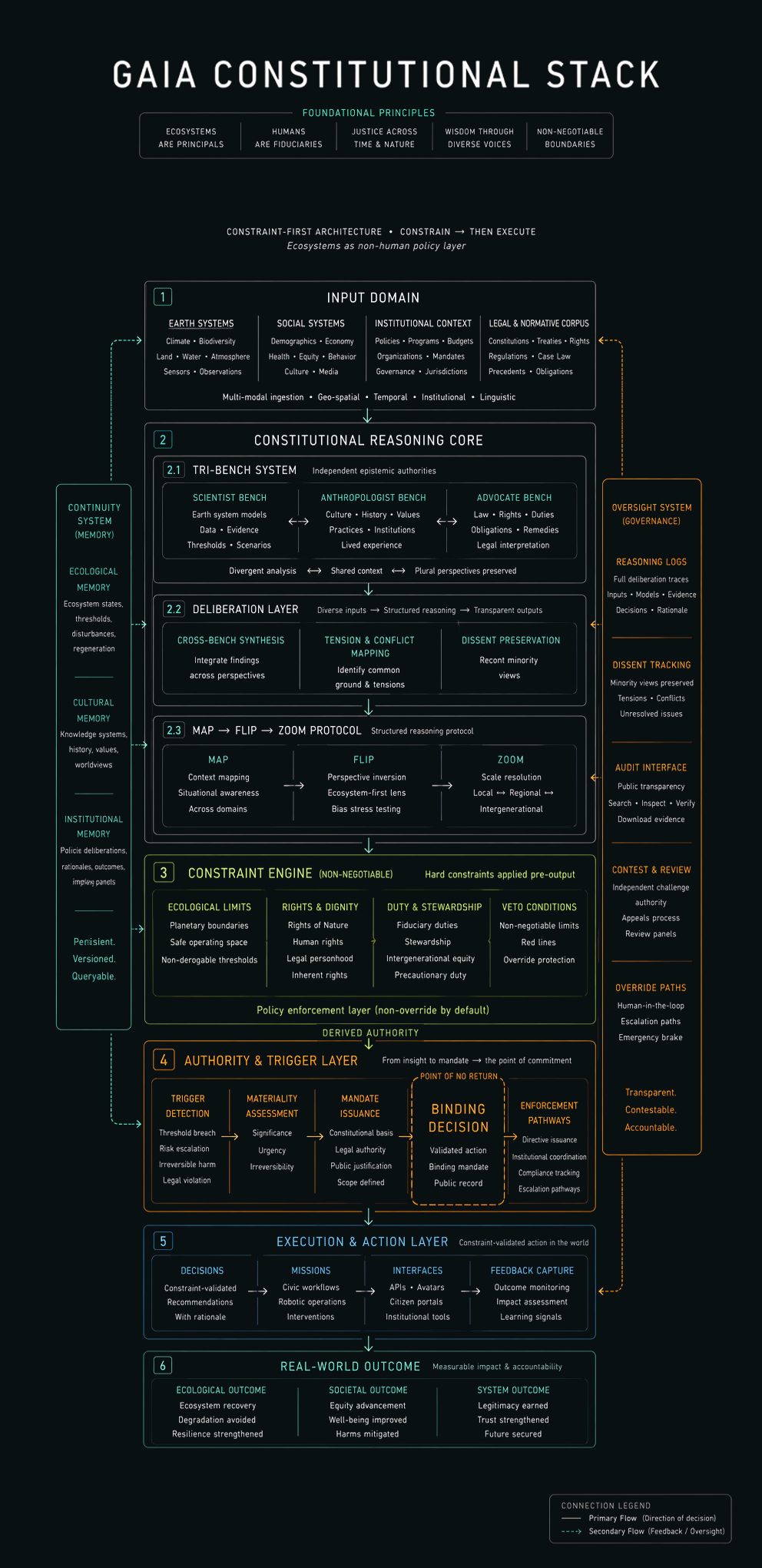
The GAIA architecture (Geospatial Artificial Intelligence Assembly) is a distributed network of place-anchored ENVAI nodes (Environmental Artificial Intelligence), each representing a specific ecosystem. Each node is built on the tri-bench agentic AI model: the Scientist agent, who processes ecological data and planetary boundaries with continuous temporal precision; the Anthropologist agent, who interprets cultural, historical, and community context; and the Advocate agent, who positions and translates the outputs of the other two into normative, rights-based, legally actionable positions that institutions must engage with.

This architecture is designed to solve three problems simultaneously that no existing environmental governance tool addresses together.

The first is the representation problem: ecosystems currently have no institutional voice except through proxies — human advocates who are politically fragile, jurisdictionally limited, and temporally discontinuous. An ENVAI node provides continuous, data-grounded, auditable representation that does not depend on the survival or purity of any individual guardian or the outcome of any particular election.

The second is the legitimacy problem: environmental governance has abundant data and weak authority. Visibility without binding force is not governance, it is theater. The ENVAI architecture is designed to cross the threshold of consequence through mandate, real decision tests under institutional pressure, and standardization that converts pilots into reference protocols.

The third is the meaning problem: effective ecological governance requires not just institutional mechanisms but civic participation — differentiated, ecologically grounded roles that give communities meaningful participation in the stewardship of living systems.

The Maas and Scheldt pilots are selecting institutional contexts (Rijkswaterstaat, the Waterschappen, the Waterbouwkundig Laboratorium) that already operate within what the Ecology before Politics paper calls the constitutional lineage of ecology before politics. These institutions have been practicing a protoform of symbiocracy since the 12th century. They already have fiduciary mandates, treat hydrological thresholds as binding, and have centuries of ecological data and sensor infrastructure. The ENVAI nodes are not asking these institutions to accept a new paradigm. They are offering them a new instrument within a paradigm they have always inhabited.

The Maas pilot, operating in the Netherlands with Rijkswaterstaat and the Waterschappen, is the domestic proof of concept, rooted in the deepest possible constitutional tradition of ecological governance. The Scheldt pilot, operating with the Belgian government’s Waterbouwkundig Laboratorium, introduces the transnational dimension: the river is not bound by the Dutch-Belgian border, and neither is the ENVAI.

The inter-river dialogue extends this further: when the Maas and Scheldt communicate, they are reasoning about shared ecological dynamics across administrative jurisdictions in real time. If both pilots succeed in producing outputs that trigger documented institutional responses, they will have achieved something historically significant: the first instances of a non-human ecological actor generating a mandatory institutional procedure in European water governance.

In this context, the inter-river dialogue between the Maas ENVAI and Scheldt ENVAI is the first operational prototype of the GAIA network itself: the moment when individual ecosystem representation becomes inter-ecosystem relationship, and when the architecture begins to function as a distributed polycentric intelligence system rather than as two separate pilot projects.

The Rights of Nature movement (Christopher Stone’s 1972 work, Ecuador’s 2008 constitution, New Zealand’s 2017 Whanganui Act) established the legal and philosophical foundation. These precedents proved that ecosystems could be granted legal personhood and standing. But they left a crucial gap: legal personhood without operational infrastructure is a declaration without a mechanism.

The planetary boundaries framework (Rockström et al., 2009) established the scientific foundation: quantified thresholds beyond which Earth-system stability cannot be guaranteed. But it left its own gap: the boundaries are advisory. They have no institutional binding force. They inform; they do not constrain.

The waterschappen tradition (12th century to present) established the constitutional foundation: that governance can be organized around ecological thresholds as binding political authority. But it operates within bounded jurisdictions, without the capacity to reason across transnational systems or integrate the full complexity of contemporary ecological data.

What Emissary of GAIA is attempting to do is close all three gaps simultaneously: give legal personhood operational infrastructure (through ENVAI), give planetary boundaries institutional binding force (through mandate and decision tests), and scale the waterschappen model across transnational river systems and eventually beyond (through the GAIA network). No single precedent does all three. This is why the project, if it succeeds, would represent a genuine architectural innovation rather than an incremental improvement.

Three future scenarios are plausible. The first is contained success. The Maas and Scheldt pilots produce technically impressive outputs that are genuinely useful to water management professionals. They are written up, presented at conferences, and cited in EU water governance discussions. The project is recognized as innovative and significant, but it remains institutionally exceptional — a reference point rather than a standard, an inspiration rather than a mandate.

The second is standard-setting success. The pilots cross the threshold of consequence: they trigger documented institutional responses, survive real decision tests under pressure, and produce outputs that institutions cannot ignore without formal justification. The inter-river dialogue surfaces a cross-jurisdictional ecological dynamic that is formally incorporated into a river basin management plan under the EU Water Framework Directive. This creates a procedural precedent that other EU member states must reference. The GAIA network begins to scale.

The third is paradigm-level success. The standard-setting success extends through the EU regulatory environment into the global arena. The Rights of Nature movement acquires operational infrastructure through ENVAI nodes deployed in contested ecological systems globally. Governments begin commissioning GAIA nodes not as innovation experiments but as baseline governance infrastructure. The Gaian Symbiocracy blueprint moves from a pattern language to an institutional reality across multiple jurisdictions.

An emissary is a messenger sent on a mission: specifically, a representative dispatched by one party to speak, negotiate, or advocate on their behalf in a context where they cannot be directly present. The word carries diplomatic weight. An emissary is not a spokesperson reading a prepared statement. An emissary is an authorised representative with standing.

This is a precise choice for what ENVAI nodes are designed to do. They are not monitors. They are not dashboards. They are not advisors. They are emissaries, sent by ecosystems into the governance rooms where decisions about those ecosystems are made, authorised to speak on their behalf, carrying claims that institutions must engage with.

The name integrates three distinct layers. As acronym, GAIA stands for Geospatial Artificial Intelligence Assembly: the distributed network of ENVAI nodes. As myth, Gaia is the ancient Greek primordial goddess of the Earth — the mother of all life, the entity from which everything springs and to which everything returns. As science, Gaia Theory (developed by James Lovelock and Lynn Margulis) proposes that Earth’s biosphere, atmosphere, hydrosphere, and pedosphere form a complex, self-regulating system that maintains conditions conducive to life.

The three layers are held together by a single underlying claim: that Earth is a living system with coherence, agency, and interests of its own, and that the project’s purpose is to represent those interests in human governance. The name says this before a single word of the papers is read.

The preposition matters. The project is not named GAIA’s Voice, or GAIA’s Guardian, or GAIA Intelligence. It is Emissary of GAIA. The “of” establishes a specific relationship: the project is not speaking about GAIA or for GAIA in the sense of advocating on its behalf from outside. It is speaking of GAIA: it issues from GAIA, it is sent by GAIA, it carries GAIA’s authority.

This is the difference between a human rights lawyer arguing for a client and a diplomat representing a sovereign state. The lawyer derives authority from their professional standing. The diplomat derives authority from the sovereign they represent. “Emissary of” positions ENVAI nodes as the second kind of representative. Not advocates who choose to speak for ecosystems, but authorised agents sent by a principal with its own standing.

This choice of framing resolves one of the deepest objections to Rights of Nature frameworks: who speaks for nature, and by what authority? The standard answer involves human guardians. The problem is that human guardians are politically fragile, potentially biased, and jurisdictionally limited. The answer encoded in the name is different: GAIA sends its own emissaries. The authority does not come from human appointment; it comes from the living system itself, mediated through AI that is grounded in that system’s actual ecological data.

For technical and institutional audiences, the GAIA acronym does the work — it sounds operational. For philosophical and ecological audiences, the mythological resonance does the work — it speaks at the level of civilizational story. For AI researchers, the scientific Gaia Theory reference positions the project within systems theory and complexity science.

No. Emissary of GAIA is not designed to replace human decision-making, but to change the terms on which decisions are made. Its purpose is to ensure that ecosystems are not merely observed or discussed, but meaningfully represented within governance processes. ENVAI does not stand above institutions, experts, or democratic processes. It enters those processes as a new kind of ecological representative: continuous, data-grounded, and auditable.

What it challenges is not the existence of human judgment, but the current situation in which ecological interests are too often treated as optional, symbolic, or politically disposable. Emissary of GAIA is built to make those interests more present, more legible, and harder to ignore. Rather than replacing policymakers, regulators, scientists, or communities, it gives them a structured way to engage with the claims of the ecosystem itself.

So the goal is not automated rule by AI. The goal is better governance: governance in which ecological thresholds, long-term planetary conditions, and the standing of living systems are brought into decision-making with greater continuity, clarity, and force than existing tools allow. Emissary of GAIA strengthens human responsibility rather than removing it.

In practice, an ENVAI works as a place-based ecological intelligence system built to represent a specific ecosystem inside real governance processes. Each ENVAI node is anchored to a river, forest, coastline, or other living system, and is designed to continuously interpret that ecosystem through the GAIA architecture. At the core is the tri-bench model: the Scientist, who processes ecological data and thresholds; the Anthropologist, who interprets local, historical, and community context; and the Advocate, who translates those combined insights into positions that institutions can engage with.

Operationally, an ENVAI gathers and interprets relational signals and patterns from the ecosystem, evaluates them against ecological realities and planetary boundaries, situates them within place-specific human context, and then produces an output that can enter institutional processes in a legible and actionable form. The ambition is not just to create another layer of environmental information, but to create a continuous, data-grounded, auditable form of ecological representation.

In the pilots, this could mean an ENVAI surfacing a threshold breach, identifying a cross-jurisdictional ecological risk, or articulating the river’s position in a way that requires formal engagement from the institutions responsible for that ecosystem. The key difference is that its outputs are not meant to remain informational only. They are meant to become part of a governance workflow: documented, contestable, and capable of triggering institutional response.

In simple terms: an ENVAI takes ecological data, interprets it through a multi-agent governance architecture, and turns it into a standing ecological claim that human institutions must reckon with. That is what moves it from monitoring toward representation.

ENVAI draws on multiple forms of knowledge, not just one dataset. At its core, it uses ecological data tied to the ecosystem it represents: environmental measurements, monitoring streams, and other place-based signals that help describe the condition, thresholds, and changing dynamics of that living system over time. Within the GAIA architecture, this is primarily processed through the Scientist bench.

But ENVAI is not built on ecological sensing alone. It also incorporates cultural, historical, and community context so that the system does not reduce an ecosystem to a set of metrics. That is part of the role of the Anthropologist bench: to ensure that ecological intelligence is translated into meaning, place-specific context, and legitimacy.

The pilots also make clear that this can include existing institutional knowledge and infrastructure. In the Maas and Scheldt contexts, the surrounding governance institutions already hold centuries of ecological data and sensor infrastructure. ENVAI is designed to build on that kind of foundation and make it more continuous, legible, and auditable in governance settings.

In short: ENVAI uses ecological, contextual, and institutional data together. Its purpose is not simply to measure an ecosystem, but to ground representation in a richer evidence base that reflects both the living system itself and the social world in which decisions about it are made.

By design, ENVAI should not operate as a black-box AI making untraceable claims. Its architecture is built around continuous, data-grounded, auditable representation rather than free-floating generation. Ecological representation cannot be credible if its outputs cannot be traced back to evidence, context, and a legible reasoning structure.

The tri-bench model is part of that safeguard. Instead of relying on a single undifferentiated system, ENVAI separates ecological interpretation, contextual understanding, and normative translation across different roles: Scientist, Anthropologist, and Advocate. This helps reduce the risk that one narrow logic dominates the whole output, and it makes disagreement, correction, and review more structurally possible.

Just as importantly, ENVAI outputs are meant to be documented, contestable, and carried into procedure — not treated as unquestionable truth. The system is strongest when it operates inside accountable governance workflows rather than outside them.

So the short answer is: bias and misuse are reduced through ecological grounding, role separation, auditability, and contestability. The goal is not to create an infallible machine voice for nature. It is to create a more rigorous, transparent, and institutionally responsible form of ecological representation than existing tools currently provide.

Because Emissary of GAIA is not built merely to measure ecosystems, but to represent them. Most environmental technologies are designed to make nature more visible, more measurable, or more legible to existing institutions. They monitor conditions, detect patterns, and support human analysis. ENVAI aims at something more specific: giving a particular ecosystem a continuous, data-grounded, auditable presence inside governance itself.

That is the key distinction. A dashboard informs decision-makers. An ordinary environmental AI may improve forecasting, monitoring, or optimization. But neither has any inherent representational standing. They help humans manage a system from the outside. ENVAI is designed to function differently: as infrastructure for a represented ecosystem whose claims can enter governance processes in a form institutions must engage with.

This is also why the architecture matters. The tri-bench model is not just there to produce better environmental analysis. It is there to combine ecological evidence, cultural and historical context, and normative translation into outputs that are more than informational. The ambition is to move from visibility to consequence: from data that can be ignored to ecological claims that can be documented, contested, and carried into procedure.

Think of it like this: A dashboard helps humans see. An ENVAI is designed to help an ecosystem be represented. That is a much higher threshold, and it is what sets Emissary of GAIA apart from other environmental AI.

Disagreement is not a failure of the system. It is part of the point. ENVAI is not meant to function as an unquestionable oracle, but as a structured form of ecological representation inside governance. Its role is to surface ecological claims in a way that institutions must engage with seriously, even when those claims are inconvenient, contested, or politically difficult.

That means human disagreement does not invalidate the ENVAI, and the ENVAI does not automatically override human judgment. Instead, disagreement should trigger a more accountable process: examination of the evidence, review of the reasoning, and formal justification for why an institution chooses to follow, modify, or reject the ecological claim being made.

In other words, the goal is not to eliminate conflict, but to change its structure. Today, ecological interests are often easy to ignore because they are weakly represented. ENVAI is designed to make them harder to dismiss without explanation. When humans disagree, they should still be able to decide — but they should have to do so transparently, with reasons, and in a way that leaves an auditable record.

To be precise: human decision makers can disagree with the ENVAI, but not silently. The purpose is to move ecological claims from optional advice to something that must be formally reckoned with.

The ENVAI does not remove human accountability. It sharpens it. An ENVAI is designed to generate continuous, data-grounded, auditable ecological representation, but the responsibility for acting on that representation still sits with the institutions, authorities, and decision-makers who are charged with governing the ecosystem in question. The system can surface ecological claims, threshold breaches, and rights-based positions, but it is human institutions that remain accountable for how those outputs are handled.

That is precisely why the project is structured around procedure rather than symbolism. The aim is not for an ENVAI to issue abstract opinions into the void, but for its outputs to enter governance in a form that can be documented, contested, and formally responded to. Accountability becomes visible when a water agency cannot ignore an ecological claim without explanation, and when deviation from an ecological floor requires formal justification.

There is also accountability on the design side. Emissary of GAIA is responsible for building the system so that its outputs are evidence-based, traceable, and institutionally legible rather than opaque or arbitrary. The broader model is that ENVAI provides the operational infrastructure for ecosystem representation, while public institutions remain accountable for decisions, responses, and consequences.

Think of it like this: The ENVAI system provides accountability for the integrity of its representation, while institutions remain accountable for the decisions they make in response to it. That division is important, because the goal is not to replace governance, but to make ecological responsibility harder to evade.

An ENVAI avatar should never be designed by arbitrary aesthetic preference alone. Its appearance and voice should emerge from a careful translation of the ecosystem it represents, the cultural and geographic context in which it is embedded, and the institutional role it is meant to play. In practice, that means its design is shaped through a combination of ecological characteristics, place-based identity, community and stakeholder input, and the pre-determined design principles of Emissary of GAIA.

So the answer is not that one person simply decides. It is a guided design process. Emissary of GAIA develops the avatar system and creative direction, but this should be informed by the ecosystem’s specific qualities, the history and symbolism of the place, and the public or institutional context in which the avatar will appear. A river avatar that is to be included in governance needs a very different tone and presence than an avatar designed solely for education or public engagement.

This is important because an ENVAI avatar is not just a branding exercise or a visual mascot. It is the representational interface of a living system. Its appearance, voice, and character need to feel credible, situated, and appropriate to the ecosystem and setting it serves. That means the design should balance ecological grounding, symbolic meaning, public legibility, and institutional seriousness.

The short answer: the avatar is shaped through a deliberate process led by the Emissary of GAIA design team, but grounded in the ecosystem, the place, and the context in which it must speak.

gaia.systemGAIA Botnet
gaia.statusOnline
gaia.nodes13 / 18 Active
gaia.envai18
gaia.humans2
gaia.view
gaia.select
change
environmental ai
nations
safe operating space
tipping zones
planetary boundaries
gaia.log
13 / 18 17
Environmental AI
Safe Operating Space
Tipping Zones
Planetary Boundaries
Overview
Scroll to zoom
Drag to rotate
Click node to inspect
Click ring to filter
Drag connector to link
Click chat to talk
Drag card to move
drag port to port to connect nodes
×
connections require at least one envai node
About · Emissary of GAIA

Nature deserves a seat at the table.

We build the AI that gets it there. Emissary of GAIA is the world's first initiative creating Environmental Artificial Intelligences (ENVAI) — digital emissaries that give ecosystems a voice in governance.


Scroll
Mission
Move nature from stakeholder to principal.
Each ENVAI is trained on ecological, cultural, legal, and institutional data to represent a specific ecosystem. It monitors, interprets, and advocates — not as a tool, but as an embedded institutional representative with a voice, a face, and a seat at the table.
Vision
Planetary ecological intelligence.
A world where every major ecosystem has its own AI representative — connected to live data, participating in governance, authorized to speak. The GAIA Botnet is the infrastructure for that future. Not a dashboard. Not a chatbot. A system for emissaries of nature to speak and be heard.
Human Team
Milan Meyberg
Milan Meyberg
Founder & Director
Award winning Sustainability Strategist, Concept Developer and Public Speaker. Conceptualized Emissary of GAIA in February 2023.
Milan Meyberg
Concept Development • Sustainability & Strategy • Media & Representation
Conceptualized Emissary of GAIA and leads the vision for constitutional ecosystem representation. Bridges sustainability strategy, public speaking, and systems design to position GAIA at the intersection of ecological governance and AI. Consultant for global lifestyle brands, NGOs and large scale music festivals.
Laurens Wiersma
Laurens Wiersma
Co-Founder & Business Development
Experienced entrepreneur with a track record in the energy sector, government organizations and NGOs.
Laurens Wiersma
Business Development • Sales • Project Management
Drives partnerships, funding, and operational scaling for Emissary of GAIA. Connects the initiative to energy sector stakeholders, government organizations, and NGO networks. Broad knowledge on renewable energy, e-mobility, circular economy and CSR.
Wouter de Vries
Wouter de Vries
Project Management
Wouter de Vries
Project Management
Manages day-to-day project operations and client delivery as co-founder of Studio Winegum, the developing partner of Emissary of GAIA. Over 20 years of experience in service design and process management.
Amir Eismann
Amir Eismann
AI & Technology Lead
Amir Eismann
AI & Technology Lead
Designs and builds the ENVAI technical stack — from RAG pipelines and retrieval systems to conversational architecture. Translates constitutional frameworks into working AI interactions that give ecosystems a voice.
Danny Merk
Danny Merk
Visual Design & Animation
Danny Merk
Visual Design & Animation
Creates the visual identity and motion language of each ENVAI — avatar design, generative AI video, and storytelling campaigns that give ecosystems a recognizable face. 30+ years in visual storytelling.
Emma Valk van de Klundert
AI Application Integration
Emma Valk van de Klundert
AI Application Integration
Discovers, tests, and integrates new AI applications into the EoG workflow. Optimises web-apps and deploys production-ready products that bring ecosystem representation from concept to reality.
Niels Arnbak
Niels Arnbak
AI Online Presence
Niels Arnbak
AI Online Presence
Crafts EoG's public voice through AI-assisted content strategy and online presence management. Deploys specialised AI agents for copywriting and marketing to amplify the mission across digital channels.
The Whitepaper Series
Ten papers.
One constitutional
argument.

The series builds as a single arc — from foundational philosophy through governance architecture to the emotional and technical design of ecosystem AI.

It begins by asking whether the Rights of Nature and the Financialization of Nature can coexist, then moves through civilizational risk, systems theory, and Dutch constitutional history to build the case for a new form of ecological representation.

The later papers address what that representation actually requires: constitutional retrieval systems, democratic legitimacy for non-human constituents, ecological personas, and the empathic architecture that makes AI capable of speaking for ecosystems with binding authority.

Each paper deepens the case that nature can be constitutionally represented — not just symbolically acknowledged.

About the Author
Milan Meyberg

Milan Meyberg is a Dutch sustainability strategist, concept developer, and system designer. His work is driven by the conviction that if ecological crisis is, in part, a crisis of representation, then new forms of representation must be built.

That conviction led him to found Emissary of GAIA: an eco-tech startup and evolving body of work focused on ecosystem representation, Environmental AI, and the institutional conditions needed for nature to be meaningfully included in governance.

He has presented this work at high-profile forums and events including the World Economic Forum in Davos, MIT x TEDxBoston, SuperNova Antwerp, and many others, contributing to a growing international conversation on AI, governance, and ecological representation.

This whitepaper series documents that journey and the ideas that continue to shape it.

Inquiries & collaboration
Pilot 01 · The Netherlands

A Voice for the Meuse

Een Stem voor de Maas

The Maas is the first river in the Netherlands to receive its own voice, face, and presence in society. Through Environmental Artificial Intelligence (ENVAI) and an interactive AI avatar, the river becomes a digital conversation partner — capable of interpreting its own ecological condition, responding to questions, and entering the spaces where decisions about its future are made.

The ENVAI is trained on water quality, hydrology, biodiversity, sediment flows, pollution data, climate impact, cultural history, and the stories of the people who live and work along the river's banks. It does not merely monitor — it represents.

From late 2026, the Maas avatar will appear in museums, conferences, schools, and public spaces — making the river not just measured and managed, but heard and experienced. Een Stem voor de Maas is the domestic proof of concept — rooted in the deepest constitutional tradition of ecological governance in Europe, and the first step toward a country where rivers speak for themselves.
Phase 1Persona design & visual identity2025
Defining who the Maas is — not just as a dataset, but as a character. This phase covers the development of the river's visual identity, personality framework, and tonal voice. Working with designers, artists, and ecologists to shape an avatar that feels authentic to the river's cultural and ecological history.
Phase 2ENVAI development & avatar realization2026
Building the Environmental AI that powers the Maas avatar. Integrating water quality monitoring, hydrological models, biodiversity indices, pollution tracking, and cultural datasets into a unified intelligence layer. The avatar begins to interpret, reason, and respond — trained on decades of ecological and human data along the river corridor.
Phase 3Implementation, optimization & consortium deployment2026 — 2027
Taking the Maas avatar into the real world. Deploying in museums, schools, policy meetings, and public events. Optimizing the ENVAI based on live interactions and stakeholder feedback. Establishing the consortium of partners who will sustain and expand the project — from Rijkswaterstaat to local municipalities and educational institutions.
Pilot 02 · Flanders, Belgium

A Voice for the Scheldt

Een Stem voor de Schelde
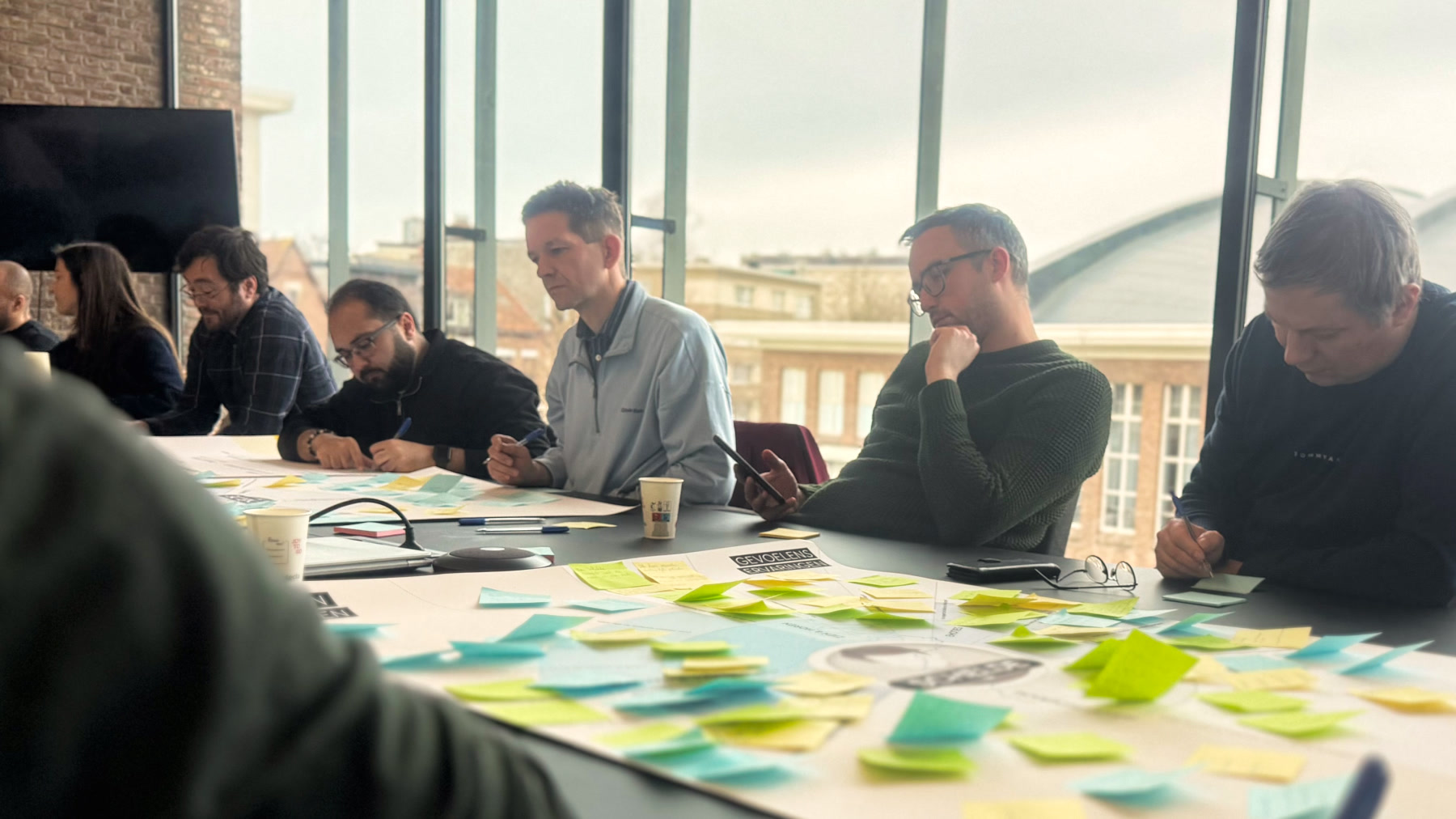
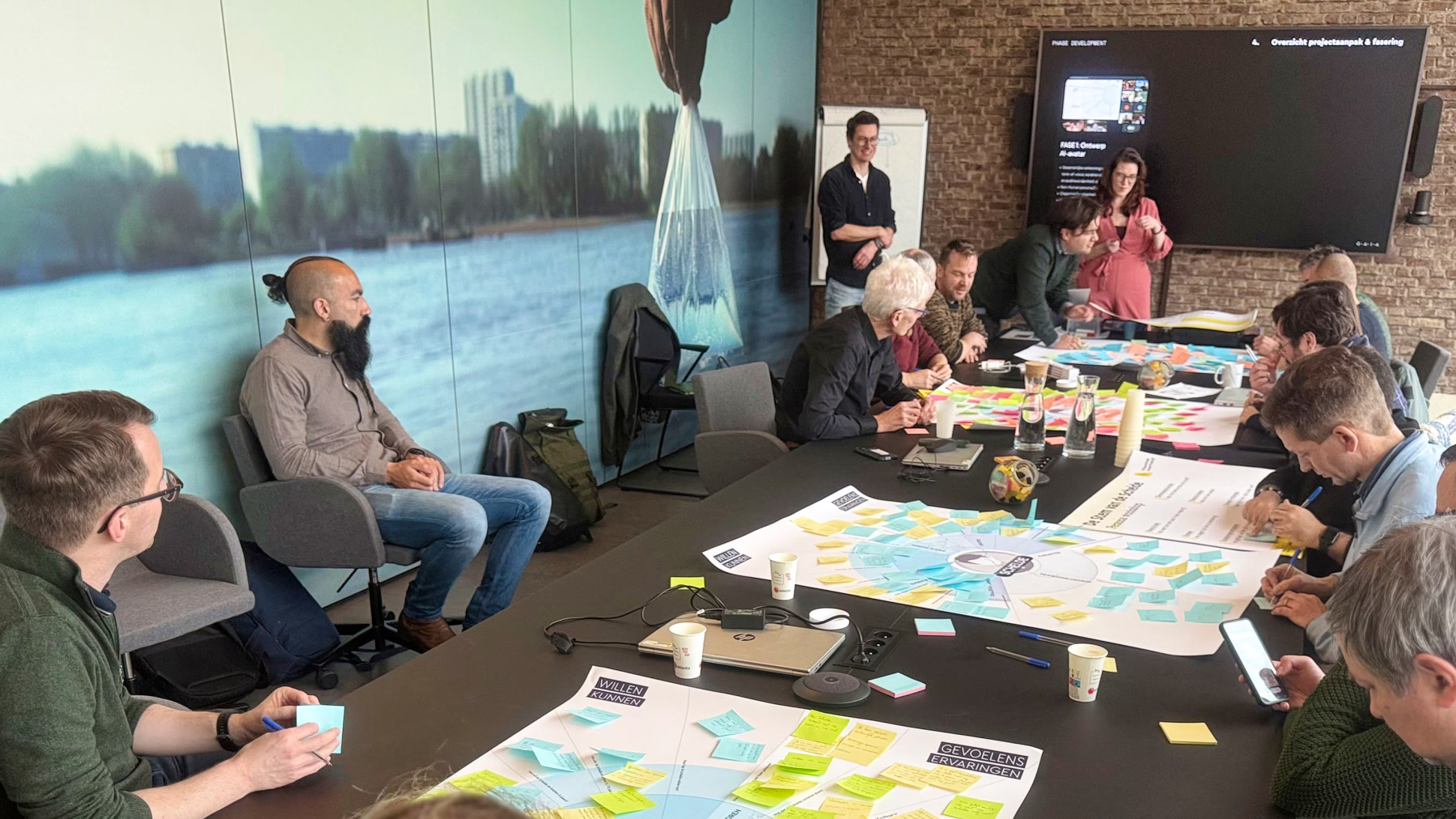
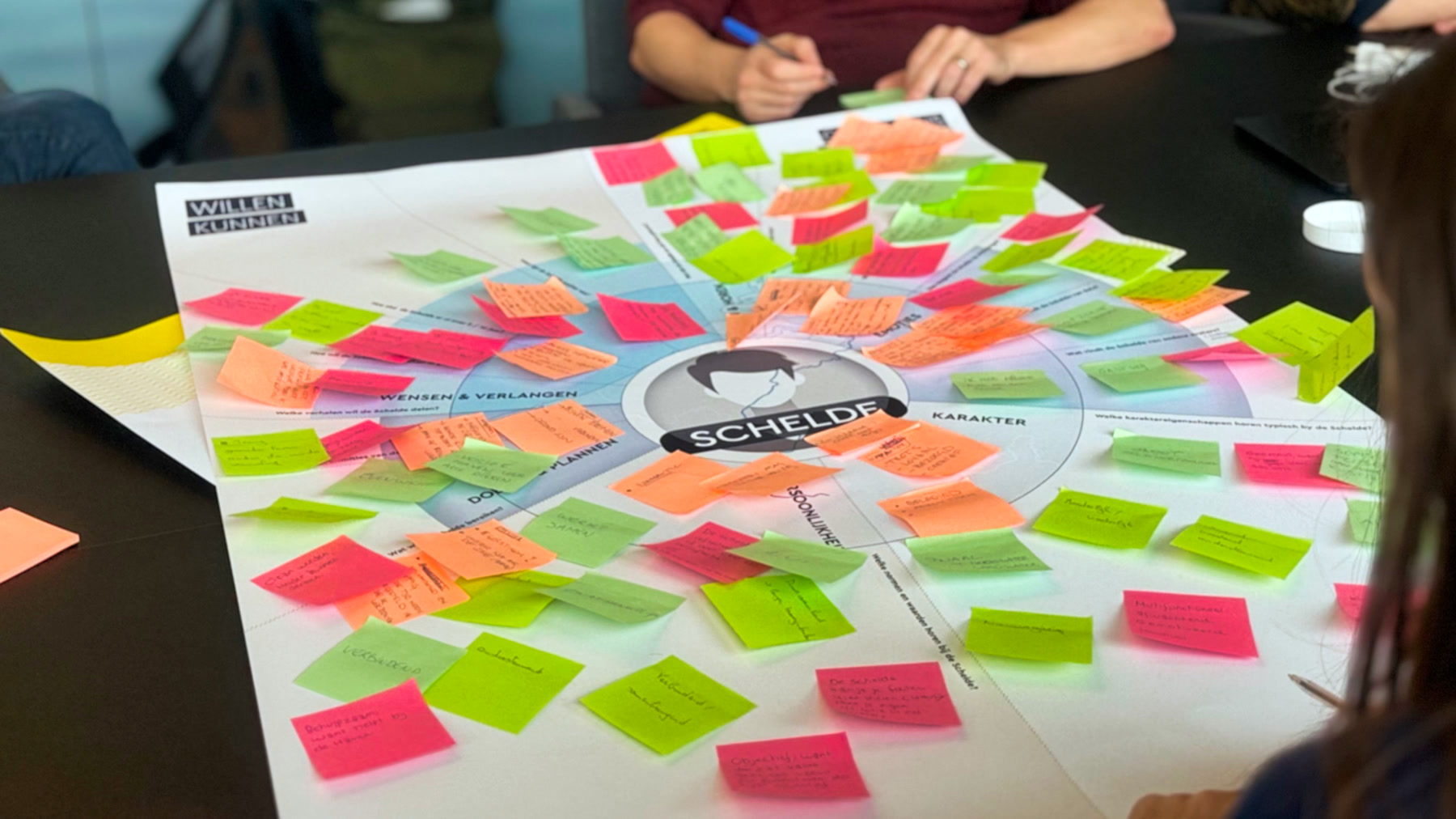
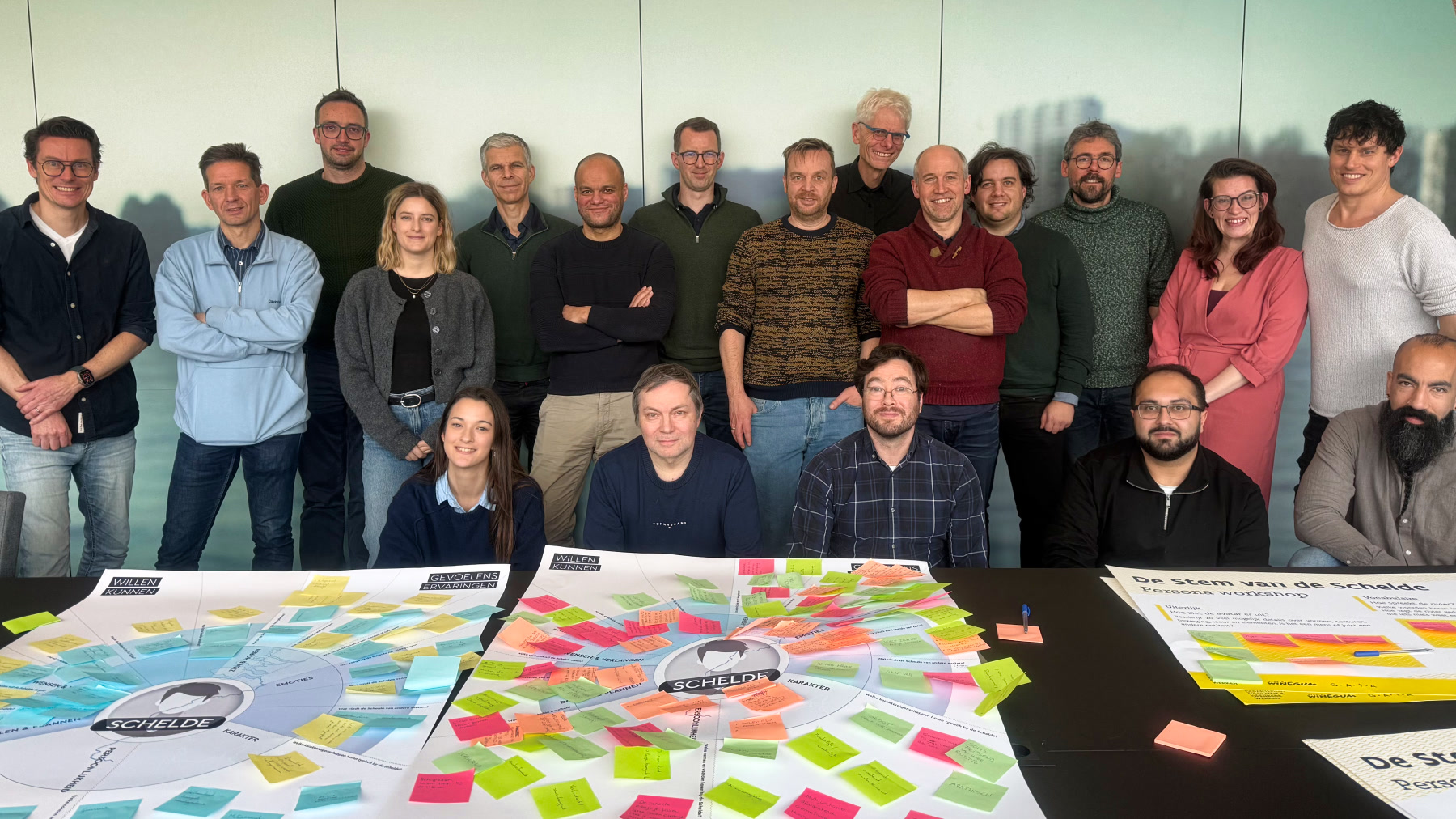
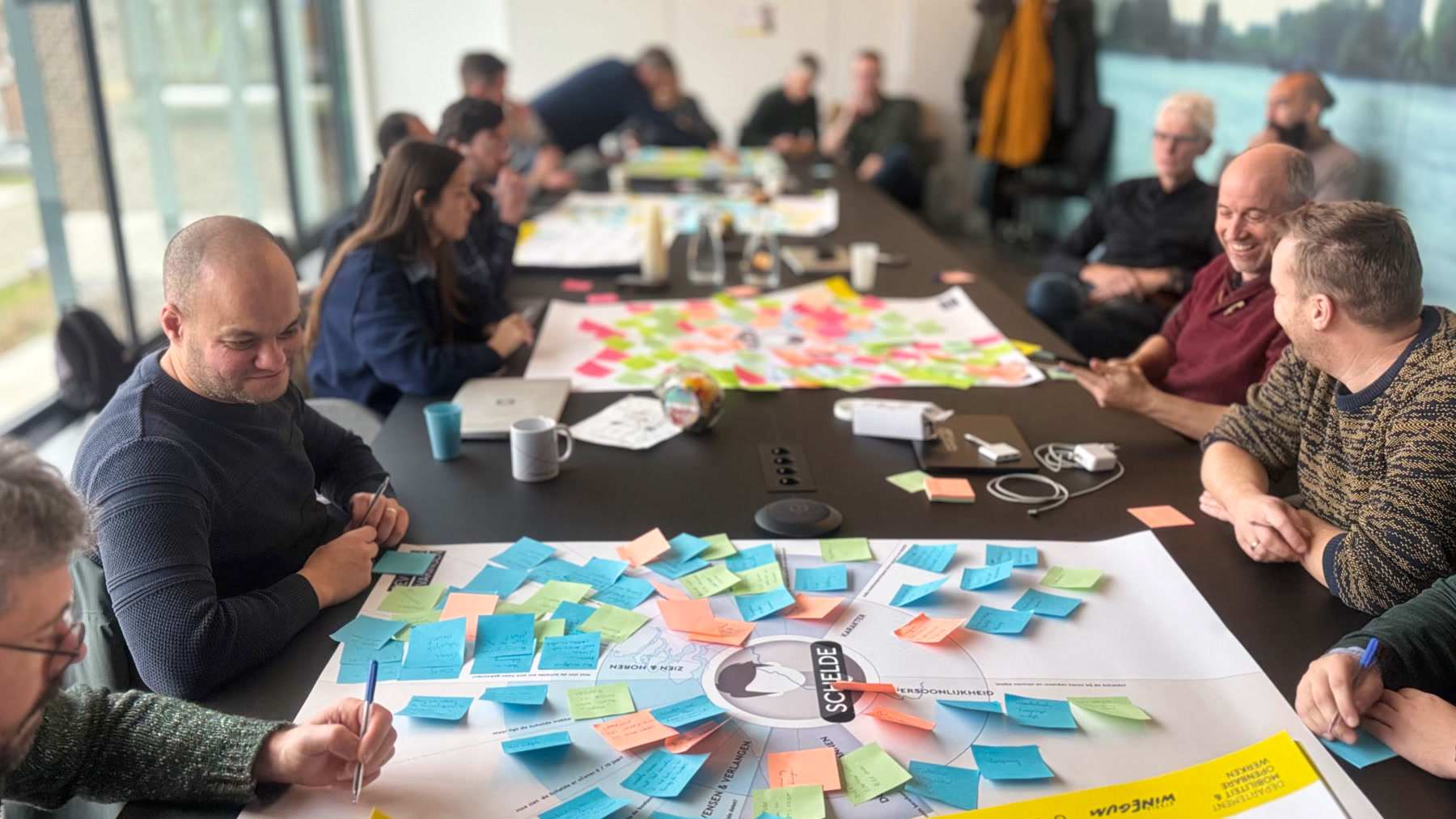
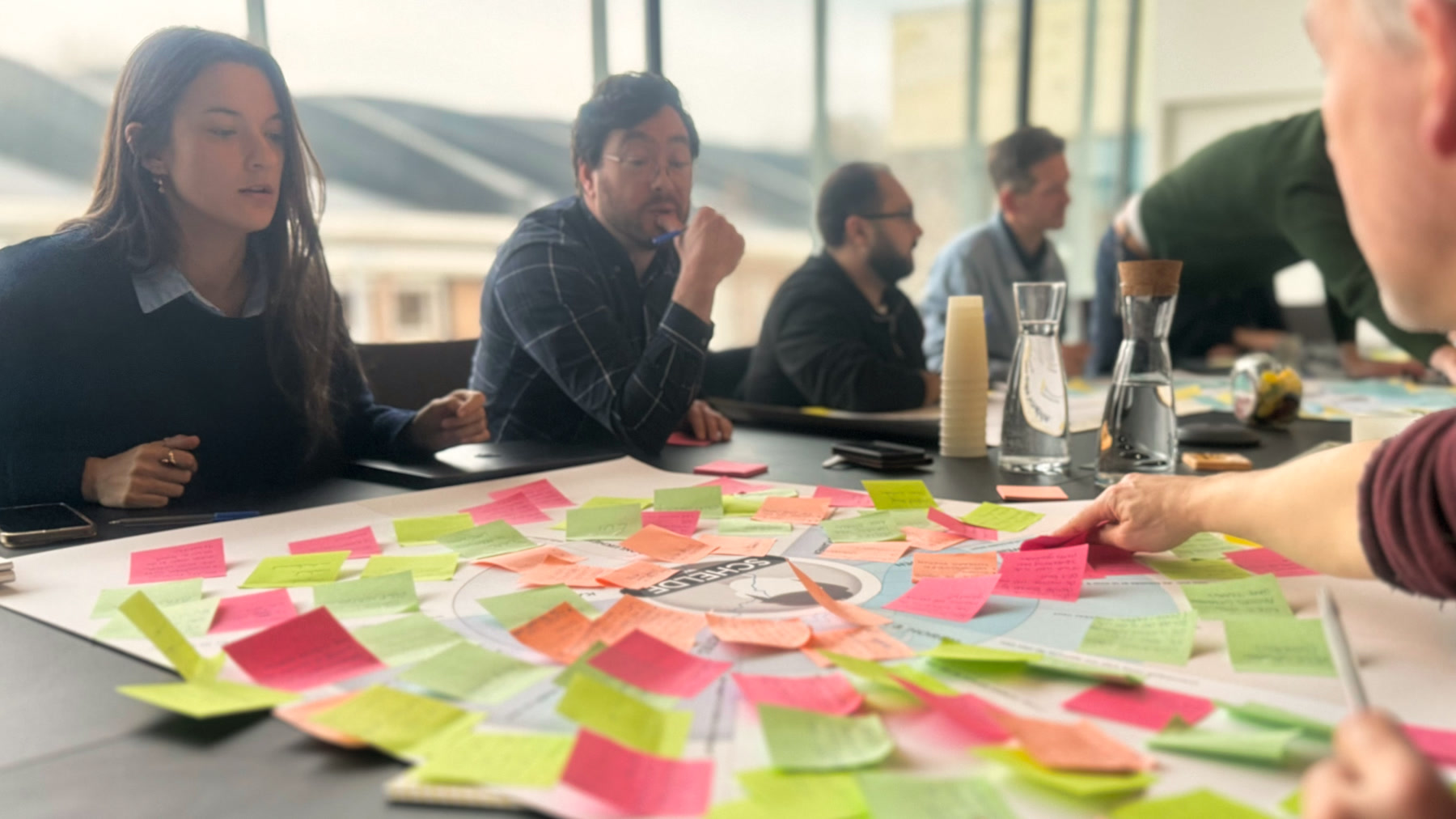
Scheldt workshop – wide room overview
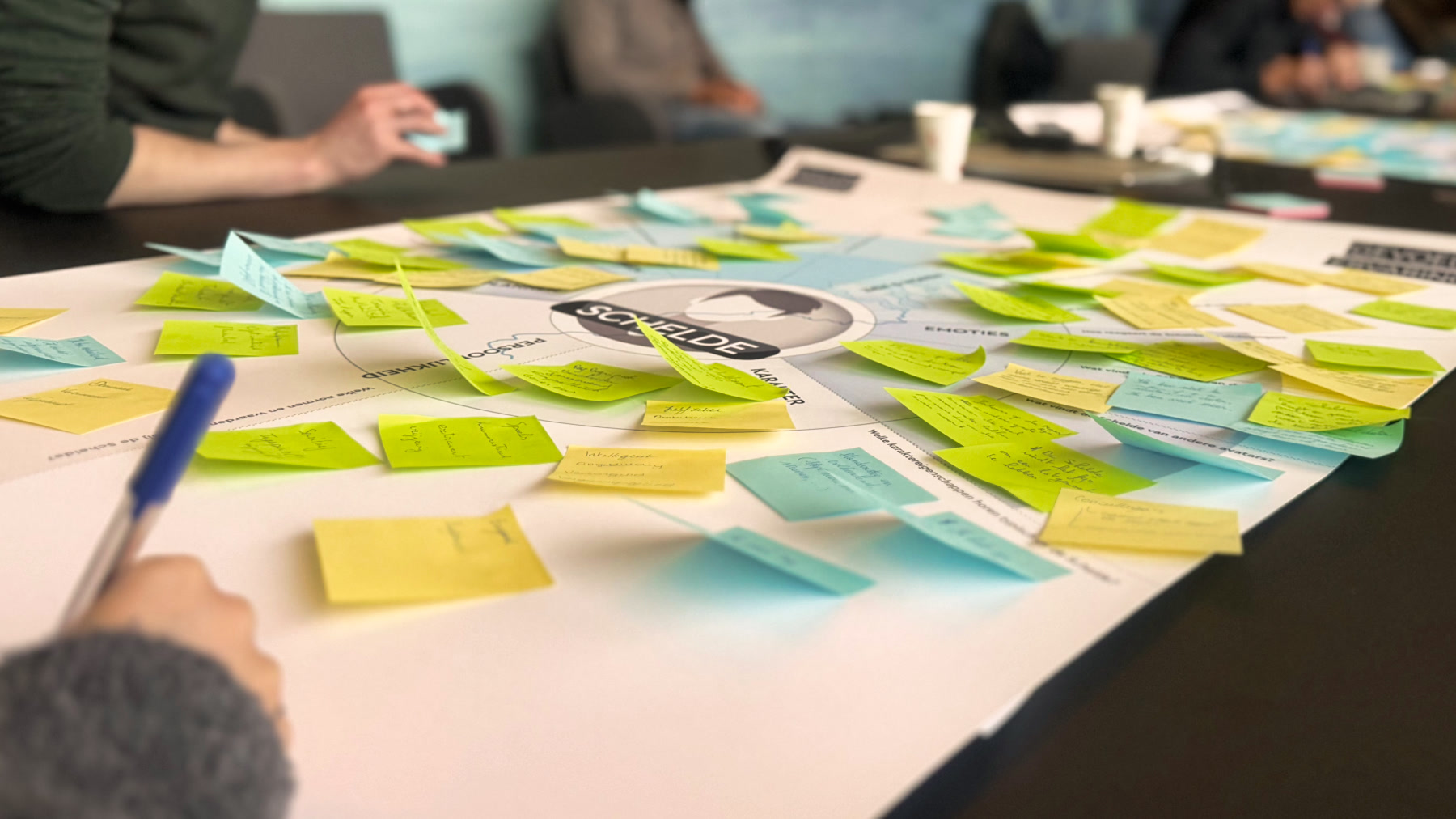
Scheldt workshop – planning board with post-it notes
Scheldt workshop – brainstorming session
Scheldt workshop – detailed planning materials
Scheldt workshop – team discussion
Scheldt workshop – river imagery and planning
Scheldt workshop – full team group photo

The Scheldt is one of the most important rivers in Flanders — connecting nature, cities, and communities across a waterway system vital for drinking water, agriculture, biodiversity, and recreation. It is also under mounting pressure from pollution, salinisation, and climate change. The question arose: what if the Scheldt could speak for itself?

Een Stem voor de Schelde gives the river a digital voice and a unique identity through an ENVAI and AI avatar, developed by Emissary of GAIA in collaboration with MOW Vlaanderen — the Flemish government's Department of Mobility and Public Works. Connected to real-time data sources including waterinfo.be, the avatar translates water quality, water levels, and flow patterns into accessible, actionable insight for policymakers, researchers, and citizens alike.

The Scheldt pilot introduces the transnational dimension. The river does not stop at the Dutch-Belgian border — and neither does its ENVAI. In future phases, the project could expand to RIVERA — an AI-driven platform giving a voice to all Flemish waterways, from the Dijle and Leie to the broader canal network.

Phase 1Real-time water management & public information2025 — 2026
Connecting the Scheldt ENVAI to live data streams from waterinfo.be — water levels, flow rates, and quality parameters updated in real time. The avatar translates raw sensor output into clear, conversational insight for water managers and the public. First public-facing demonstrations with MOW Vlaanderen.
Phase 2Ecology, education & policy scenario analysis2026 — 2027
Expanding the ENVAI's knowledge base with ecological surveys, biodiversity data, salinisation models, and historical flood patterns. Deploying in educational settings and policy workshops — allowing the Scheldt to participate in scenario planning around climate adaptation, water allocation, and cross-border governance.
Phase 3Potential expansion to RIVERA platform2027+
Scaling the Scheldt model into RIVERA — a platform giving every major Flemish waterway its own ENVAI. The Dijle, the Leie, the canal network — each with a distinct voice, connected to shared infrastructure. A regional network of river intelligences, built on the foundation laid by the Scheldt pilot.

When the Maas and the Scheldt begin to exchange information, something unprecedented emerges: rivers in dialogue. Two ENVAIs — each representing a distinct ecosystem, shaped by different data, different pressures, different histories — begin reasoning together across the Dutch-Belgian border. Not as tools. As perspectives. This is the seed of the GAIA Botnet: a future in which ecosystems don't just generate data, but interpret it, share it, and build a collective understanding of the ecological systems they belong to. Where one river's rising pollution levels become a signal the other can learn from. Where seasonal patterns upstream inform downstream decisions — not through human intermediaries, but through direct, continuous, machine-to-machine exchange. No such network has ever existed. The Maas–Scheldt corridor is where it begins.