
This system is not yet accessible on mobile.
GAIA operates through a full interactive interface designed for desktop environments.
To enter, switch device.
emissaryofgaia.com© Emissary of GAIA B.V. All rights reserved.
Water authorities, environmental agencies, and crisis coordinators face the same structural problem: the gap between detecting a signal and mounting an effective, coordinated response.
Emissary of GAIA closes that gap — a human-supervised decision-support layer connecting environmental monitoring to institutional action, approval, communication, and audit. Each stage supervised. Nothing automated past human authority.
Emissary of GAIA maps every environmental use case to the same six-stage chain: from raw signal through interpretation, action, approval, communication, and audit.
Each stage is human-supervised. The system ingests environmental data, structures it into actionable intelligence, recommends response options with traceable reasoning, routes decisions for sign-off, and logs every step.
Nothing is automated past institutional authority. The matrix shows which stages are active per use case — click any row to explore.
The institutional challenge is rarely a lack of data alone. More often, it is the gap between detection and coordinated response: the time required to interpret fragmented signals, prepare internal briefings, align across teams, and communicate clearly with residents before conditions worsen.
Emissary of GAIA helps public authorities interpret hydrological, meteorological, and geospatial signals in context. It generates reviewable priority actions, supports locality-specific warning preparation, and helps translate technical risk into public-facing communication.
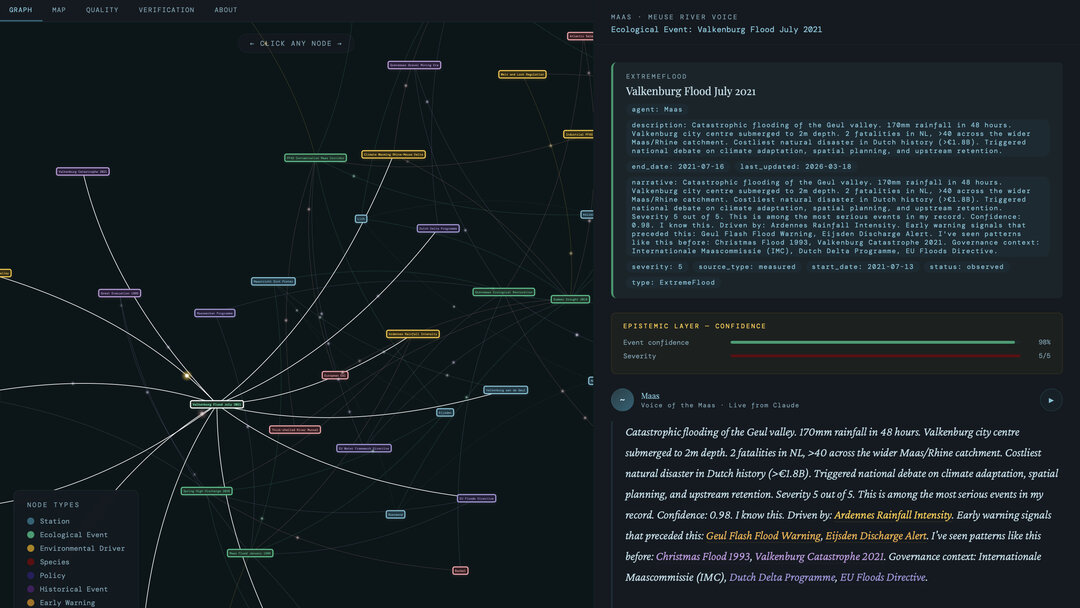
Water levels have been rising for two days.
The action threshold has been crossed.
Walk through the response chain, step by step.
Low-water conditions, prolonged drought, and broader water stress create pressure across ecology, navigation, infrastructure, and regional coordination.
Emissary of GAIA brings together water levels, weather patterns, ecological stress indicators, and contextual data to support earlier and more coherent responses.
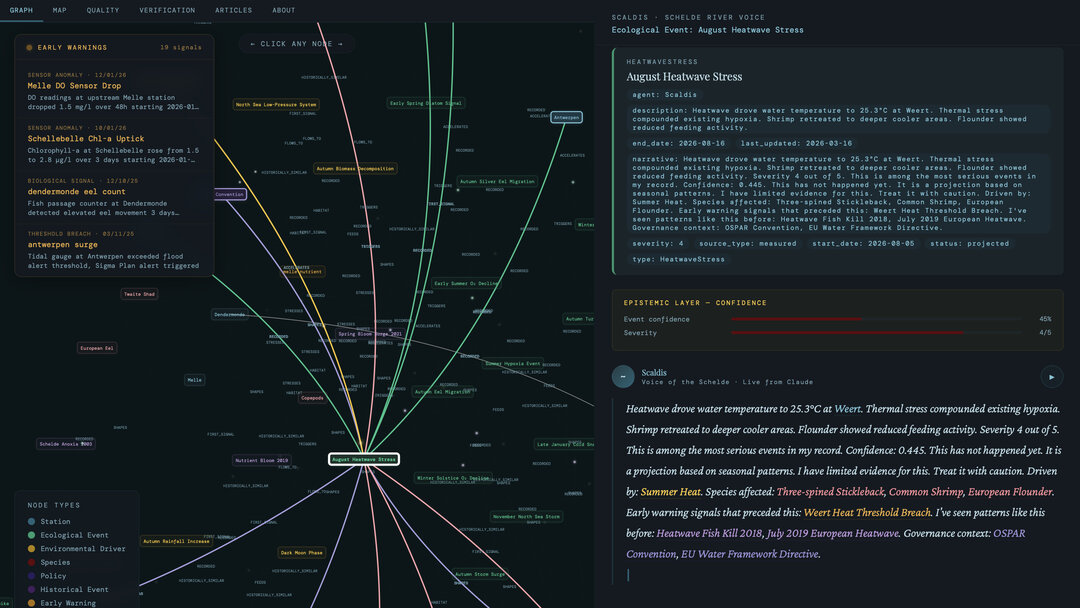
It is early June 2022. Rhine discharge has been declining.
The LCW activation threshold is weeks away.
Walk through the anticipation, escalation, and
management chain — phase by phase.
A strange reading. Anomalous sensor data. A signal that may be insignificant, or may be the beginning of something that requires coordinated public response.
Emissary of GAIA helps structure anomalies, monitoring inputs, and reports into a traceable internal briefing. It supports faster review, clearer updates, and more coherent early-stage coordination.
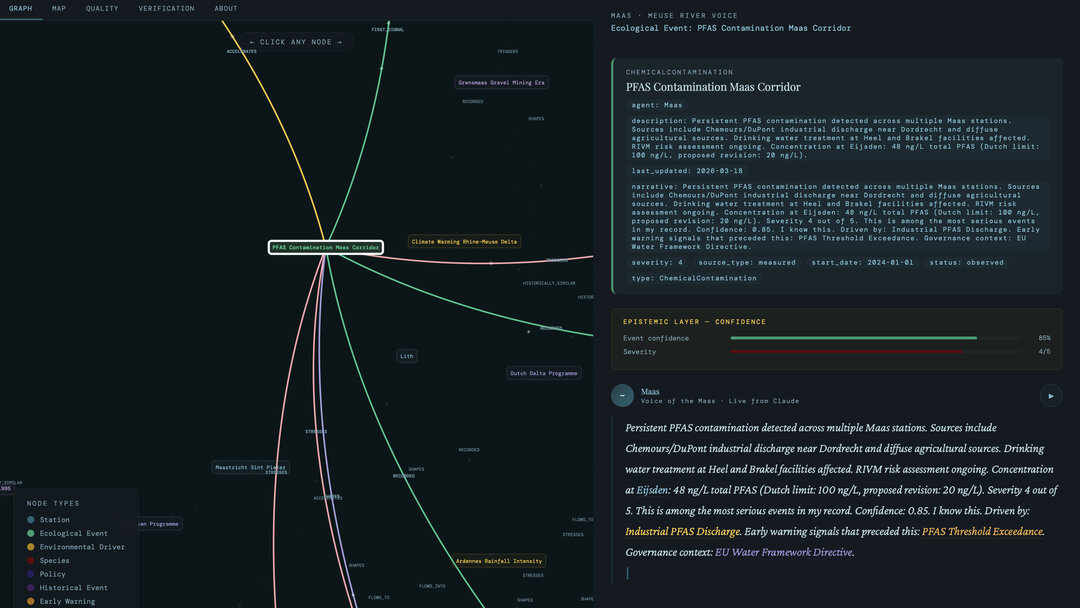
Emissary of GAIA functions as a shared interpretation layer. It helps institutions compare signals, align priorities, and prepare more coherent actions across fragmented governance settings.
The aim is not to erase institutional difference, but to reduce interpretive friction where coordination matters most.
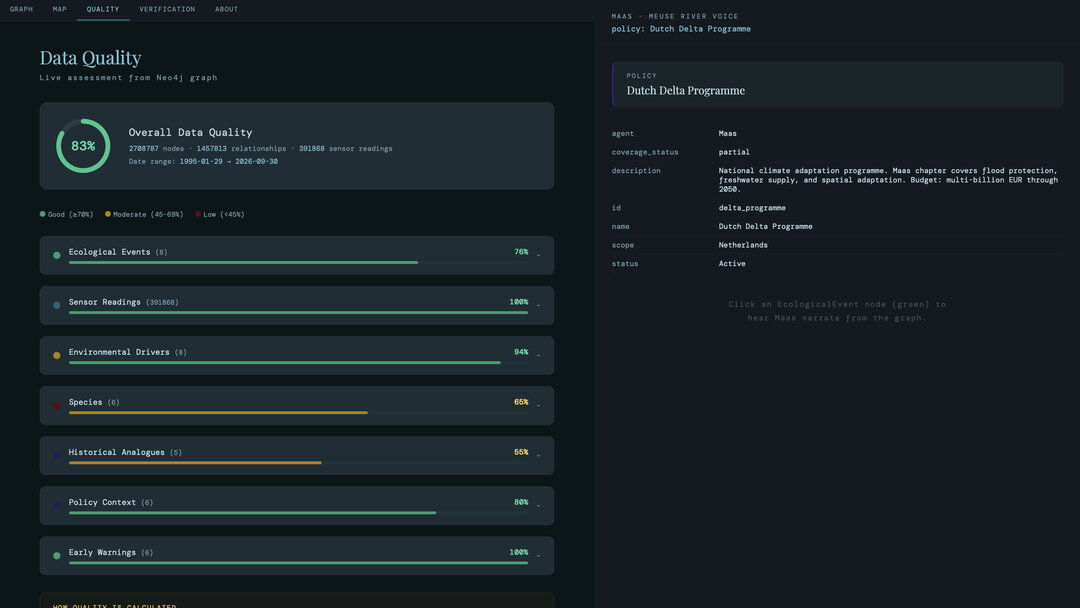
Technical information is often too fragmented, too abstract, or too static to generate meaningful public understanding.
Emissary of GAIA helps translate environmental complexity into more understandable public-facing forms — guided interaction, clearer explanation, and ecosystem-avatar communication layers that make trade-offs easier to grasp.
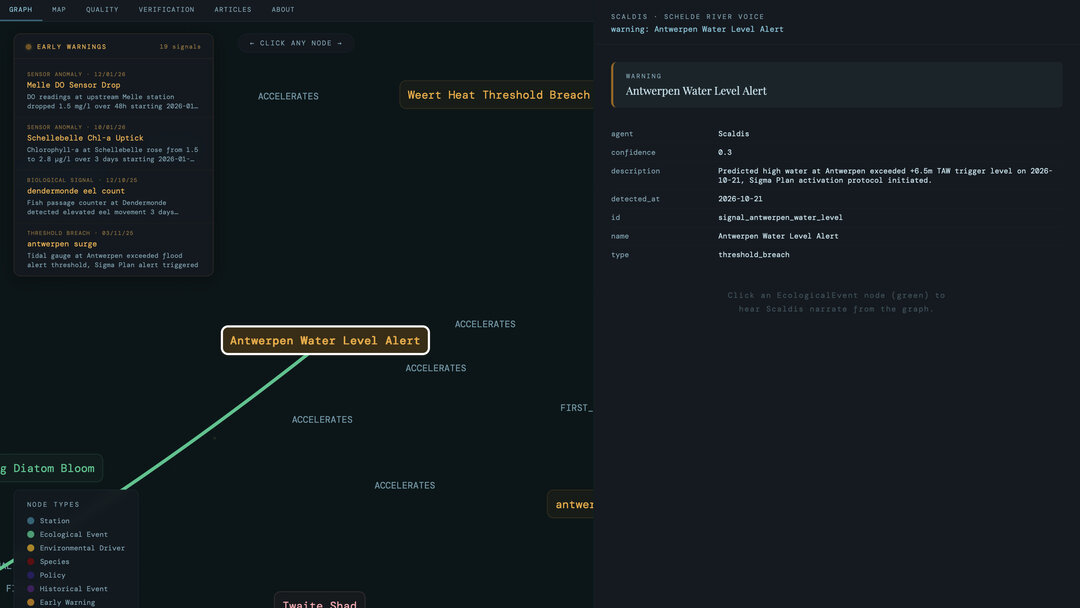
These pilots are being developed as institutional instruments — not as technology demonstrations, but as working tools within real public-service workflows.
Existing systems detect, monitor, and forecast. Emissary of GAIA extends that capacity into the domain of action — turning signals into reviewable decisions, coordinated responses, and clear public communication. Every step supervised. Every output traceable. Human authority retained throughout.
This website uses a functional cookie to remember your consent preference. No tracking or analytics cookies are used.
Emissary of GAIA is developed as a public-service instrument for environmental governance. We collaborate with governments, municipalities, safety regions, ecological organizations, research institutions, NGOs, social enterprises, and international governance bodies.
If your work involves environmental monitoring, climate adaptation, cross-jurisdictional coordination, or public-facing environmental communication, we'd welcome the conversation.
Emissary of GAIA
Closed beta. Request access, or use your invite.
Sign-in opens when the ENVAI back-end enters public beta. Until then, request access — we'll let you in as seats open.
We'll reply to your email personally. Usually within a few days.